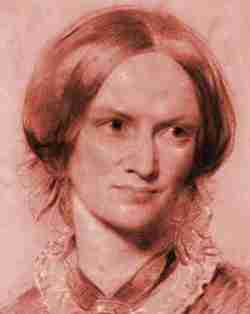
Charlotte Brontë was an English novelist and poet, the eldest of the Brontë sisters. She was born in Thornton, Yorkshire, England on 21st April 1816 and died in Howarth, Yorkshire on 31st March 1855 aged 38.
“Jane Eyre” (1847)
“Shirley” (1849)
“Villette” (1853)
“The Professor” (Published 1857)
Biography Timeline
1816: Charlotte Brontëwas born on 21st April at The Vicarage, 74 Market Street, Thornton, Yorkshire, England. She was the daughter of a Cleric, Patrick Bronte and sister to Branwell, Emily and Anne. She was educated at the Clergy Daughter’s School in Cowan Bridge and at Miss Wooler’s School, Roe Head.
1820: The Bronte family move to the Parsonage at Haworth in April where Patrick is perpetual Curate.
1829: She takes up writing about her fantasy world of Glasstown and Angria.
1835: She goes to Roe Head School as a teacher but resigns in 1838.
1842: She goes to Brussels with Emily in February to study at the Pensionat Heger. Death of her Aunt Elizabeth in November and they return home.
1843: She returns to Brussels to teach English and to further her own studies.
1846: “Poems by Currer, Ellis and Acton Bell” (The sister’s pseudonyms) is published in May with the family paying the costs. She offers the novel “The Professor” for publication without success. In August she begins writing “Jane Eyre”.
1847: “Jane Eyre” is published in October and is highly acclaimed.
1848: Branwell dies from consumption on 24th September and Emily of the same disease on 19th December.
1849: Anne also dies from consumption on 28th May. The novel “Shirley” is published in October.
1852: She visits Anne’s grave and realises there are several mistakes on the tombstone which she has corrected.
1853: Publication of her novel “Villette.”
1854: She marries Arthur Bell Nicholls, her father’s curate, despite her father’s objections on 29th June.
Charlotte Brontë died at Howarth on 31st March 1855 due to complications with her pregnancy and is buried in the nearby churchyard.
Influences
The Brontë sisters read many eighteenth-century poets including Oliver Goldsmith and William Cowper. The latter’s poem “The Castaway” was a family favourite but Charlotte was never very keen on Alexander Pope. She read widely and her major influences were William Shakespeare, John Milton, Jonathan Swift, Samuel Richardson, William Makepeace Thackeray, John Bunyan, Robert Burns, Lord Byron, Walter Scott, and Robert Southey.
Blackwood’s Magazine was a regular purchase at the Parsonage and after 1832 the family subscribed to Fraser’s Magazine. Both contained news items but also a large portion of literature.
In writing “Jane Eyre” she was influenced by the growing Gothic literary tradition that was popular at the time. It is not certain whether she read Horace Walpole’s 1764 novel “The Castle of Otranto” but that work is generally considered to be the first Gothic novel. Later critics recognised the great importance she had on the development of the novel as a form as well as the exploration and development of female emotions.
Further Information
More information on Charlotte Brontë can be seen on the Britain Unlimited page here.
Works by Charlotte Brontë in order of publication.