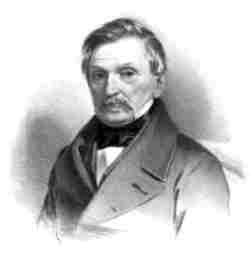
Aleksander Fredro was a Romantic Polish poet, playwright and author active during the period of the partitions of Poland. He was born on 20th June 1793 in Surochow, Poland and died on 15th July 1876 in Lviv in the Ukraine aged 83.
Major Works
“Mąż I żona” (Husband and Wife) (1822)
“Śluby Panieńskie” (Maidens’ Vows) (1833)
“Zemsta” (Vengeance) (1834)
Biography Timeline
1793: Aleksander Fredro was born on 20th June in Surochów, Galicia (modern day Poland) which was then part of the Austrian Empire. His father was a wealthy landowner and he was educated at home by private tutors.
1809: He enters the army of the Duchy of Warsaw, which was loyal to Napoleon Bonaparte, at the age of sixteen and sees action in many Napoleonic battles. He goes on to serve as an orderly officer in the general staff.
1812: He fights in the Moscow campaign and is involved in the retreat contracting typhus during the retreat.
1814: Back in France he becomes very interested in French drama and spends a few months in Paris.
1815: He leaves the army at the end of the Napoleonic Wars and returns to his family’s estate. For his war-time service, he is awarded the Virtuti Military Gold Cross and the Cross of the Legion of Honour. He begins to write theatrical comedies.
1817: He writes “Intryga na Prędce” (Hasty Scheming) which is premiered in Lwów. It is later rewritten as “Nowy Don Kichot czyli sto Szaleństw” (The New Don Quixote or a Hundred Lunacies).
1818: Ice travels to Warsaw with the manuscript of “Pan Geldhab” (Mr. Geldhab) but no theatre director is interested. It is eventually staged there in 1821.
1821: He writes his first major work “Mąż i Zona” (Man and Wife) a farce about the unfaithful lifestyles of the Polish nobility which is first performed a year later.
1822: He receives the title of Count from the Emperor of Austria. Hew rites “Cudzoziemszczyzna” (Foreign Influences).
1825: He writes “Damy i Huzary” (Ladies and Hussars) which is first performed the following year.
1826: He publishes the comedy “Pan Geldhab” (Mr Geldhab).
1832: He writes the play “Pan Jowialski” (Mr Jovial).
1833: He writes “Śluby Panieńskie, Czyli Magnetyzm Serca,” (Maidens’ Vows, or the Magnetism of the Heart) which concerns the psychology of women and also “Zemsta” (Vengeance) which is considered by some his masterpiece and is first performed in 1834.
1835: He writes and performs “Dożywocie” (The Annuity). Fredro is offended by an article written in a magazine by the Romantic poet Seweryn Goszczyński which states that his work is non-national and full of absurdities. He gives up writing altogether for the next nineteen years.
1880: He publishes his memoirs under the title “Trzy po trzy” (Topsy Turvy Talk).
Count Aleksander Fredro died on 15th July 1876 in Lwów, Austrian Galicia (modern day Lviv, Ukraine). He was buried in the family grave in the Catholic Church of the Assumption at Rudky, Ukraine.
Influences
Aleksander Fredro was born into a wealthy and powerful landed family and educated by private tutors. He joined the Napoleonic troops of the Duchy of Warsaw at the age of 16 and fought with the French even going on the Moscow campaign where he fell ill with typhus during the retreat and managed to escape from Russian captivity. His army life which continued until 1815 provided rich material for his later works and memoirs.
In 1814 he spent a few months in Paris, where he attended plays and studied French drama and stagecraft. After formally leaving the army he returned to his Father’s estate in Bieńkowa Wisznia, near Lwów (now Lviv, Ukraine).
In particular he was influenced by the works of Molière and Carlo Goldoni and wrote sharp-witted situation comedy and farce. His works use brilliant characterisation ingenious construction and were normally written in intricate verse. Another major influence was the English novelist Laurence Sterne and he echoed his narrative digressions and humorous stylistic forms for his memoirs. This can be seen at his best in “Topsy Turvy Talk” of 1880 which is considered to be one of the most brilliant Polish prose works. Among his more notable plays written in his early period are “Maż I Żona” (Husband and Wife) of 1822, “Sluby Panieńskie” (Maiden’s Vows) of 1833 which are both concerned with psychological development and “Zemsta” (Vengeance) of 1834 which comedy is thought to be his masterpiece. His plays are heavily set in the world of the gentry and employ the speech, quirks, and social behaviour of provincial Polish landowners. He also Integrated traditional Polish folk theatre elements and lively rural humour into his plays and fables.
Around 1817 he met Countess Zofia Skarbek and she became the love of his life. In an unhappy marriage since she was 15, Zofia Jabłonowska left her husband after a few years, but she still waited over ten years before marrying Fredro due to resistance from the Jabłonowski family. They finally married in 1828 and both of their children also went on to become writers. In 1822 he received the title of count from the Emperor of Austria.
Many of Fredro’s plays became and still are standards on the Polish stage and they are regarded as unsurpassed in their comic qualities and social satire. Phrases taken from his work have entered colloquial Polish. He was a literary trend in his own right providing a link between the rhymed comedy of the Enlightenment and the bourgeois comedy of Young Poland. They contain references to the Enlightenment-era rhyming comedy of Franciszek Zabłocki or Wojciech Boguslawski and elements of romantic intrigues from Alfred de Mussset-Pathay and Molière. He often gave his characters names that describe their personalities, such as Milczek (silence), Raptusiewicz (a quick temper), Birbancki (boisterous revelling) and Jowialski (joviality). The plots of many plays revolve around money, love and marriage and the dilemma whether to marry for money or for love. Love wins out in practically all of Fredro’s comedies. “Damy i Huzary” (Ladies and Hussars) of 1826 was one of only a few of his comedies to be written in prose.
In an age that glorified national martyrdom and patriotic service some of his comedies were seen as ideologically unacceptable and he was accused of being nothing but a second-rate talent imitating French models and showing a lack of national spirit. In 1835 after the Romantic poet Seweryn Goszczyński wrote a piece in a magazine describing his work as non-national and full of absurdities, Fredro abruptly stopped writing. Various critics have since disputed that the two are inextricably linked as he faced many other criticisms before. His early plays were taken up by theatres in Lwów, Warsaw, and Kraków but his later work was no longer published or offered to theatres.
He started writing again some nineteen years later but these never came up to the standards of his earlier productions. Between 1844 and 1846 he created the works “Też Trzy po Trzy” (Nineteen to the Dozen) a collection of proverbs and parables taking a bitter look at human nature and society from the perspective of old age.
In Poland, Fredro is the writer whose works are staged most often. All the greatest nineteenth and twentieth century actors have performed in his comedies and all are from his first period. After 1877, theatres in Lwów and Kraków began staging works unpublished in his lifetime. His writings have been translated into many languages, including English, French, German, Russian, Czech, Romanian, Hungarian and Slovakian.“Zemsta” was adapted for film in 1956 and again in 2002. Two of his fables, “Małpa w Kąpieli” (The Monkey in the Bath) and “Paweł i Gaweł” (Paul and Gawel) are still amongst the most popular children’s stories in Poland today.
His importance to Polish Literary society has been immense. He influenced later Polish comedy and drama writers, specifically anticipating the anti-bourgeois and satirical works of Gabriela Zapolska and Włodzimierz Perzyński and led many writers to use wit or irony in their writings about human nature.
Further Information
List of works by Fredro.