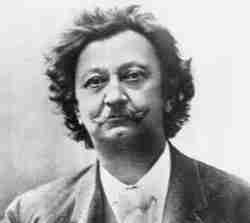
Lazar Kostić was a Serbian poet, lawyer, journalist and politician. He was born on the 12th February 1841 in Kovilj, Serbia and died on 27th November 1910 in Vienna, Austria aged 69.
Major Works
“Maksim Crnojević” (1863)
“Pera Segedinac” (1882)
“Jovan Jovanovic Zmaj” (Book of Zmaj) (1902)
“Poems” (1909)
Biography Timeline
1841: Lazar Kostić was born on the 12th February in Kovilj, Serbia. His father was Petar Kostić a military officer in the service of Austrians. His mother was Kristina whose family were merchants. He was educated at primary school in Kovilj and then the gymnasium in Pancevo where he was taught in German. His high school was the Serbian Orthoodox Gymnasium in Novi Sad. He began publishing some of his work, whilst still at school, in local magazines such as “Sedmica” (Week) and “Letopis Matice Rrpske” (Chronicle of Matica Rrpska).
1848: He stays with his uncle in Sremski Karlovci to celebrate the founding of the shortlived and self-proclaimed Serbian province of Serbian Vojvodina.
1858: He translates Homer’s “Iliad” into Serbian and publishes his poems “Letopis Matice Rrpske” (Dreams I dream, Between Reality and Dream)and “Sećanja na Ruvarca” (Memories on Ruvarac) in the literary magazine “Danica”.
1859: He finishes school and goes to the University of Pesta to study law. He begins translating the plays of William Shakespeare which he will continue for much of the rest of his life.
1860: He teaches Latin, German and Hungarian in school and then becomes a lawyer and public notary and becomes the president of Novi Sad’s Court House. He joins the newly founded Serbian People’s Freeminded Party and is active in the United Serbian Youth organisation but is persecuted by the Austrian authorities. He falls in love with the actress Jovanka Kirjaković although she is to die young. He writes the poems “Sahrana” (Funeral) and “Posle Sahrane” (After the Funeral) in her honour. Between now and 1872 he serves as Lord Mayor of Novi Sad twice.
1863: He writes the drama “Maksim Crnojević” as his first attempt to put an epic poem on the stage.
1864: For the 300th anniversary of Shakespeare’s birth he adapts two scenes from “Richard the Third” using iambic verse in Serbian for the first time.
1866: He finally graduates from the Law School of the Budapest University with a Doctor of Philosophy in Jurisprudence.
1867: When Mihailo Obrenovic the Third, Prince of Serbia is assassinated the authorities try to implicate him and other Serbian intellectuals in the plot and he is sent to jail but later released.
1868: The new Prince of Serbia is the 14-year-old Milan the Fourth Obrenovic who is a great admirer of “Maksim Crnojević”. With the aid of the Prince he obtains the post of editor of the political and literary magazine “Srpsku Nezavisnost” (Serbian Independence) in Belgrade.,
1872: He is arrested after the police find correspondence in code to the writer Vaso Pelagic calling for the national liberation of Serbs. After his release he is elected as a member of the Hungarian Parliament.
1873: He publishes his first collection of poems and another the following year.
1875: He publishes the play “Pera Segedinac” (Peter of Szeged) which deals with the struggle of the Serbs for their rights.
1878: The Prince of Serbia sends him to the Congress of Berlin as the diplomat Jovan Ristic’s assistant.
1880: He is sent to St Petersburg in Russia as part of the Serbian delegation. Belgrade’s opposition parties begin criticising his writing.
1883: He is asked by the King to leave Belgrade for a while and goes to live in Cetinje where he becomes editor-in-chief of “Glas Crnogoraca” (The Montenegrin Voice), the official paper of the Kingdom of Montenegro.
1884: He writes “Kritički uvod u Opštu Filosofiju” (A Critical Introduction to General Philosophy).
1890: He publishes the play “Gordana” but it is not successful. He moves to Sombor in September. He writes the book “Dnevnik Snova” (Diary of Dreams)
1891: He translates Derburg’s ”Pandekti” for the Croatian Government.
1895: He marries the rich heiress, Juliana Palanački, which is arranged by his friend Lazar Dunderski as he won’t allow him to marry his young daughter Jelena Lenka whom he has fallen in love with. He becomes the head of the Serbian National Library. Jelena dies suddenly and some think it to be a suicide.
1902: He publishes “Jovan Jovanovic Zmaj” (Book of Zmaj).
1909: He publishes “Poems”.
1910: He finally completes the popular poem “Santa Maria della Salute” which he has been writing for several years about Jelena Lenka Dunderski and which is considered the finest example of his love poetry.
Lazar Kostić died on 27th November 1910 in Vienna, Austria and was buried in the Serbian Orthodox Cemetery in Sombor, Serbia.
Infuences
Laza Kostić was influenced by Ancient Greek tragedies as well as epic poetry and philosophy from medieval Serbia. A major love of his was William Shakespeare which he read at school and who was virtually unknown in the country at the time. He adapted part of “Richard the Third” for a stage production in Serbia using verse in iambic pentameter for the first time. He also translated Hamlet, but this was heavily panned by critic Bogdan Popović.
He began publishing his work whilst still at school in periodicals such as “Sedmica” and “Letopis Matice Srpske” and also started translations when very young. He was very well educated and could read Greek, Latin, German, Hungarian, English, French and Russian languages which enabled him assimilate thought from many other European writers and philosophers.
He also travelled widely as a secretary to the Serbian diplomat Jovan Ristic and visited Paris and Moscow and was at the Congress of Berlin in 1884. Many Russians compared him to Peter the Great due to his height and his exuberant spirits and after marrying Juliana Palanački they toured to Vienna, Dubrovnik, Geneva, Venice, Naples and the Czech Republic all of which gave him rich experiences for his own poetry.
Kostić was friends with the head of one of Serbia’s most important noble families Lazar Dunderski and fell in love with his daughter Jelena Lenka Dunđerski but the two were not allowed to marry by her father. When she died aged twenty-five, some say by suicide, he wrote “Sante Maria della Salute” which many consider one of the most beautiful love poems written in the Serbian language.
His translation of Homer’s “Iliad” appeared in 1858 but he was discovered as a poet by Djordje Popovic the editor of the literary magazine “Danica” and some of his most important poems such as “Dreams I Dream”, “Between Reality and Dream” and “Memories on Ruvarac” were published there.
He also lectured on literature and at the turn of the twentieth century he discussed the relationship between the culture of Serbia and other major Western European countries and he has had a great influence on many writers from the region ever since.
Academicians of the Serbian Academy of Science and Arts have compiled a book entitled “The One Hundred Most Prominent Serbs” and Laza Kostić is included. He is so famous in the country that he has several schools named after him in Belgrade and Novi Sad.
Further Information
List of works by Kostić.