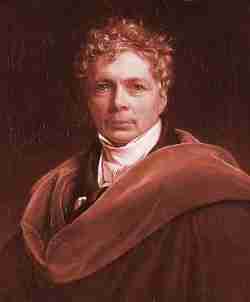
Friedrich Wilhelm Joseph Schelling was an influential German philosopher who is placed at the midpoint of German idealism. He was born in Leonberg, Germany on 27th January 1775 and died in Bad Ragaz, Switzerland on 20th August 1854 aged 79.
Major Works
“System des Transzendentalen Idealismus” (System of Transcendental Idealism) (1800)
“Presentation of My System of Philosophy” (1801)
“The Philosophy of Art” (1802-3)
“Of Human Freedom” (1809)
“The Ages of the World” (1811-15)
Biography Timeline
1775: Friedrich Wilhelm Joseph von Schelling was born on 27th January in Leonberg, Baden-Wurttemberg, Germany. His father was Joseph Friedrich Schelling who was a Lutheran minister and his mother was Gottliebin Marie. He was educated at the Latin school in Nurtingen, where he met Friedrich Holderlin, and then at the monastic school in Bebenhausen where his father was a professor and Chaplain.
1777: His father becomes a professor of Oriental languages at the theological seminary in Bebenhausen, near Tübingen.
1790: He enrols at the Tubinger Stift (seminary of the Evangelical-Lutheran church in Wurttemberg) on 18th October aged 15 even though the normal age is 20. He shares rooms with Georg Wilhelm Friedrich Hegel and Friedrich Holderlin. The students were more interested in philosophy than theology and Schelling in particular is inspired by Immanuel Kant and Johann Gottlieb Fichte.
1792: His graduation master’s thesis is entitled “Antiquissimi de Prima Malorum Humanorum Origine Philosophematis. Genes III. Explicandi Tentamen Criticum et Philosophicum”.
1794: His first philosophical work is “Über die Möglichkeit einer Form der Philosophie Uberhaupt” (On the Possibility and Form of Philosophy in General). He sends a copy to Johann Gottlieb Fichte who is very impressed. It is followed by “Vom Ich als Prinzip der Philosophie” (Of the Ego as Principle of Philosophy). In both he contends that the absolute cannot be exactly defined however, as God each person is the absolute as the absolute ego.
1795: He becomes a private tutor to the sons of a noble family from Leipzig. He moves away from Fichte saying that the older philosopher only saw nature as an object subordinated to humanity rather than the whole system working together. His philosophy of nature makes him well known amongst the other Romantic poets, artists and philosophers. He finishes his doctoral thesis entitled “De Marcione Paulinarum Epistolarum Emendatore” (On Marcion as Emendator of the Pauline Letters). He also publishes “Vom Ich als Prinzip der Philosophie, Oder über das Unbedingte im Menschlichen Wissen (On the I as Principle of Philosophy, or on the Unconditioned in Human Knowledge) and “Philosophische Briefe über Dogmatismus und Kritizismus” (Philosophical Letters on Dogmatism and Criticism). The latter defends and criticises the Kantian system.
1796: A work from this year written in Hegel’s handwriting but attributed to Schelling, Holderlin and Hegel individually survives called “Das älteste Systemprogramm des Deutschen Idealismus” (The Oldest Systematic Programme of German Idealism).
1797: He visits Leipzig with his students and attends lectures in physics, medicine and chemistry at the university. He also visits Dresden where he is fascinated by the art collection of the Elector of Saxony and meets August Wilhelm Schlegel, his wife Caroline, Friedrich Schlegel and Novalis. He publishes the essay “Neue Deduction des Naturrechts” (New Deduction of Natural Law) and “Ideen zu Einer Philosophie der Natur” (Ideas Concerning a Philosophy of Nature).
1798: He is appointed to a professorship at the University of Jena, which at the time has a large gathering of German Romantics living and working there. He publishes the treatise “Von der Weltseele” (On the World Soul).
1800: He publishes his famous work “System des Transzendentalen Idealismus” (System of Transcendental Idealism) where he attempts to unite his idea of nature with Fichte’s philosophy which concentrates on the human ego. Fichte himself is not impressed with this step and the two write many letters to each other disagreeing. Schelling is close to August Wilhelm Schlegel and in particular his wife Caroline (whom he secretly loves) and a marriage was suggested between him and Caroline’s daughter Auguste Bohmer, however Auguste dies of dysentery and many people blame him for interfering with the doctors in her condition.
1801: Georg Wilhelm Friedrich Hegel becomes a Privatdozent (Private lecturer) at Jena University with Schelling’s help and he writes “Differenz des Fichte’schen und Schelling’schen Systems der Philosophie” (Difference between Fichte’s and Schelling’s Systems of Philosophy). Schelling himself writes “Darstellung des Systems Meiner Philosophie” (Presentation of My System of Philosophy) which Fichte describes as absurd as philosophy in his opinion should not be personalised. The breach between the two men now becomes permanent.
1802: Hegel takes Schelling’s side between Schelling and Fichte and they coedit the “Kritisches Journal der Philosophie” (Critical Journal of Philosophy) together. Schelling later becomes to busy to continue with the publication, which becomes entirely Hegel’s, finally ceasing altogether in 1803.
1803: In the spring Schelling moves from Jena to Bamberg and studies medicine. August Wilhelm Schlegel had moved to Berlin and with the help of Johann Wolfgang von Goethe he gets a divorce from Caroline who then promptly marries Schelling on 2nd June. In September he takes up a post at the University of Wurzberg and this marks the period of his final breach from Hegel.
1804: He publishes “Philosophie und Religion” (Philosophy and Religion).
1805: He publishes “Aphorismen über die Naturphilosophie” (Aphorisms on Nature Philosophy) in the “Jahrbücher der Medicin als Wissenschaft” based on his lectures.
1806: He moves to Munich to become an associate of the Bavarian Academy of Sciences and Humanities and secretary of the Royal Academy of Fine Arts. Due to his official duties his publishing work gradually dwindles to nothing.
1807: Hegel’s “Phänomenologie des Geistes” (The Phenomenology of Mind) openly criticises Schelling’s position despite asking him to write the Foreword. Schelling is upset at the work but more importantly Hegel gains the reputation as the major philosopher of the era and Schelling’s star begins to wane even though the two continue to criticise each other in lectures and books until the ends of their lives.
1809: Caroline dies on 7th September and Schelling is distraught and writes a work on immortality. He publishes “Philosophische Untersuchungen über das Wesener Menschlichen Freiheit” (Philosophical Inquiries into the Essence of Human Freedom) in which he states human freedom is only a real freedom if it is freedom for good and evil. The last book published in his lifetime is “Freiheitsschrift” (Freedom Essay).
1810: Without resigning from his official duties in Munich he gives a series of private lectures in Stuttgart.
1812: He marries Pauline Gotter, a friend of Caroline’s.
1815: The essay “Ueber die Gottheiten zu Samothrake” (On the Divinities of Samothrace) is completed as part of a larger project called “Weltalter” (The Ages of the World). Only the first part of three is ever finished and it is never published.
1817: Samuel Taylor Coleridge is impressed by Schelling’s writings and talks about it in his “Biographia Literaria” thus introducing the concepts to a British audience for the first time including that of the unconscious.
1820: He begins seven years lecturing at the University of Erlangen.
1841: He is appointed as a Prussian privy councillor and member of the Berlin Academy.This gives him the right to lecture at the University of Berlin. Many famous people attend his lectures including Søren Kierkegaard and Friedrich Engels. He is not a great success however with the dominance of Hegelian thought still being prevalent and many find his lectures incomprehensible.
1845: He fails in a legal bid to condemn what he considers piracy of his ideas and he discontinues giving public lectures.
Friedrich Schelling died on 20th August 1854 at Bad Rasgatz, Switzerland. He is buried at Freidhof Bad Ragaz at Wahlkreis Sarganserland, St. Gallen, Switzerland.
Influences
Friedrich Schelling read widely amongst major philosophical texts and in particular those of Plato, Gottfried Wilhelm Leibniz, Baruch Spinoza and Immanuel Kant. He read works by the seventeenth century philosopher Jakob Böhmer, the eighteenth century Johann Georg Hamman and the Italian poet Giordano Bruno. Amongst people nearer his own times he was influenced by Friedrich Hölderlin, Johann Gottfried Herder, Johann Fichte and Johann Wolfgang von Goethe.
As a young student he greatly appreciated the work of Immanuel Kant who had raised philosophy to a higher critical level and Johann Fichte whom he heard lecture at the University of Jena in Germany. His early work on Naturphilosophie takes on a radical view of nature that was significantly different from the then current philosophical and scientific understanding of nature. He held that the divisions imposed on nature by ordinary perception or thought do not have absolute validity but should be interpreted as the outcome of the single formative energy which is the inner soul of nature.
In religion he stated that the human is distinguished from the eternal creative God by his freedom. In essence he was a pantheist whereby God exists everywhere in all natural surroundings. He also argued that the absolute is revealed by and is an essential part of works of art through transcendental Idealism. This last idea particularly appealed to the Romantics. His theory of transcendence towards a personal God appealed much later to the Existentialists of the twentieth century. Indeed Martin Heidegger said “Schelling is the truly creative and boldest thinker of this whole age of German philosophy”. His conviction was that the self-conscious I should be seen as a result, rather than as the originating act as it is the philosophy of Fichte.
He was often seen, though brilliant, as a thinker who changed from one subject to another without working on a complete philosophical system. Unlike Hegel however he did not believe that the absolute could be known through rational inquiry alone. The poet and philosopher Samuel Taylor Coleridge was particularly impressed with Schelling’s ideas, especially on the unconscious, and introduced them to Britain through works such as his “Biographia Literaria”. Although he doesn’t mention him by name Schelling’s influence can be seen in Søren Kierkegaard’s “The Concept of Anxiety” and in “Fear and Trembling” where anxiety manifests the finiteness of man who is seized by the gaze of the divine wrenching him away from the idea of total knowledge.
Sigmund Freud was later to pick up on the idea of the unconscious in 1899 in his “Interpretation of Dreams”. A group of Catholic theologians at the University of Tubingen even attempted to reconcile his philosophy of revelation with Catholic theology. By and large though his reputation fluctuated throughout the latter part of the nineteenth and early twentieth centuries and up to 1950 he was almost forgotten in Germany and elsewhere in Europe where Kant and Hegel were the dominant lines of study. Many critics dismissed him as merely a link between Fichte and Hegel. Socialist philosophers such as György Lukács often regarded him as anachronistic. In 1936 Martin Heidegger talked about his influence from “On Human Freedom” as being important to Existentialism however his work was overshadowed at the time by his enthusiastic support of the Nazi Party in Germany.
In 1954, at the centenary of his death, an international conference on his ideas was held with speakers as prominent as Karl Jaspers who published a work called “Schelling” in 1955 describing him as a forerunner of the existentialists. The philosopher Walter Schulz described him as the person who resolved the philosophical problems which Hegel had left incomplete. Other later writers such as Paul Tillich and the Frenchman Maurice-Merleau-Ponty stated their debt to his works. During the 1970’s when the fledgling environmental movement was gaining momentum his Philosophy of Nature again came to the fore. Heidegger’s reading of Schelling influenced the Post-Heideggerian French philosophical movement to move away from metaphysics.
In art too, he has had his adherents from Phillip Otto Runge through to Gerhard Richter and Joseph Beuys. In psychology Schelling was thought to have coined the term Unconscious whilst the Schelling model of segregation is a model that illustrates how individual tendencies amongst neighbours can lead to segregation of communities.
Scholarship on Schelling has now increased both in the Anglo-American and Continental spheres. As recently as 2002 the French philosopher Jean Louis Chrétien wrote “Unforgettable and the Unhoped For” which drew on Schelling from a phenomenological perspective and on his notion of the eternal past. Schelling’s philosophy has now been seen as a philosophy of affirmation and of the exuberance of life.
Further Information
List of works by Schelling.