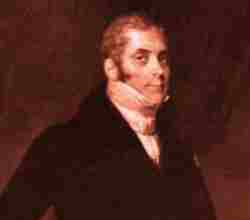
Daniel Auber was a French composer and director of the Paris Conservatoire. He started writing operas when the family’s fortune hit a rocky patch in 1820. He was born on 29th January 1782 in Caen, France and died in Paris on 12th May 1871 aged 89.
Major Works
39 operas of which most famous are “Fra Diavolo” (1830)
“Le Cheval de Bronze” (English translation “The Bronze Horse”) (1835)
“Les Diamants de la Couronne” (English translation “The Crown Diamonds”) (1841)
Biography Timeline
1782: Daniel Auber was born on 29 January in Caen, Normandy, France. He was the son of Jean-Baptiste Daniel Auber who originally worked in the Royal stables in Paris. His mother was Françoise Adelaïde Esprit, née Vincent. He was allowed to have music lessons as a child and was taught composition by Josef Alois Ladurner.
1789: The French Revolution breaks out when Auber is seven and his father is forced to leave his job and sets up as a print seller.
1802: Auber is sent to London for training to work in the family business.
1803: Due to the Breach of the Treaty of Amiens between France and Great Britain and therefore the beginning of the Napoleonic wars he is forced to leave England. Once home he is admitted to the Société Académique des Enfants d’Apollon alongside his father. He begins writing the first of five cello concertos.
1808: His cello concerto receives great praise.
1811: He is encouraged to compose a comic opera “Julie” for a local amateur society. He begins his studies with the composer Luigi Cherubini.
1813: Auber’s one-act opera “Le Séjour Militaire” (The Military Stay) was a flop and put an end to his composing for the time being.
1820: His father dies and Auber’s inability to make the family business pay makes him turn back to composition. He composes the opera “Le Testament et les Billets-Doux”. This was also badly received by the audience. Undeterred he produces another opera “La Bergere Chatelaine” which this time is a success.
1821: “Emma” receives its premiere.
1822: He joins forces with the librettist Eugene Scribe and they produce the opera “Leicester” together based on Walter Scott’s “Kenilworth”..
1825: His first major success was “Le Macon” which went on to have over five hundred performances at the Opera-Comique in Paris. He is awarded the Legion of Honour.
1828: “La Muette de Portici” was also another triumph.
1829: He is elected as a Member of the Acadamie des Beaux-Arts of L’Institut. He composes “La Fiancée”.
1830: “Fra Diavolo” is given its premiere on 28th January and remains his most successful opera. He is named director of the court concerts. On 25th August his “La Muette” is performed in Brussels and starts a riot which sets off a revolution which eventually drove out the Dutch from the region.
1831: He composes and performs “Le Philtre” (The Love Potion). The libretto was later used by Gaetano Donizetti for his famous work “L’Elisir d’Amore” (The Elixir of Love).
1833: His second grand opera “Gustave the Third” is performed. This libretto was later used by Giuseppe Verdi for “Un Ballo in Maschera” (The Masked Ball).
1835: “Le Cheval de Bronze” (The Bronze Horse) is performed at the Opera-Comique in Paris.
1836: “L’Ambassadrice” (Madam Ambassador) is first performed.
1837: “Le Domino Noir” (The Black Domino) is first performed.
1841: “Les Diamants de la Couronne” (The Crown Diamonds) is first performed.
1842: He succeeds Luigi Cherubini as Director of the Paris Conservatoire and bans the playing of his pieces at their concerts.
1843: “La Part du Diable” (The Devil’s Share) is first performed.
1847: He becomes a Commander of the Legion of Honour. The opera “Haydee” (Modest) is premiered at the Opera-Comique.
1856: “Manon Lescaut” (The Story of the Chevalier des Grieux and Manon Lescaut) is premiered.
1857: The Emperor Napoleon the Third makes Auber Imperial Maitre de Chapelle.
1868: Although his output has now slowed down due to teaching work, he has another major success “Le Premier Jour de Bonheur”.
1869: He composes “Reve d’Amour” (Dream of Love).
1870: The German army lays siege to Paris. He resigns as Director of the Paris Conservatoire so that the buildings can be used as a hospital.
Daniel Auber died on 12th May 1871 at his home in Rue Saint-Georges, Paris during the period of the Paris Commune. He was buried in the Pere Lachaise cemetery.
Influences
Daniel Auber’s parents valued music but didn’t arrange for a formal academic training in the subject for their son. He did however have violin lessons with a local teacher and was an avid follower of the Italian opera buffa of the late eighteenth century such as works by Domenico Cimarosa and Giovanni Paisiello. He was also influenced by Wolfgang Amadeus Mozart’s French works.
At the beginning of the nineteenth century, he began writing small instrumental pieces and songs although his father still encouraged him to study art and business instead. Undeterred he produced his first violin concerto around 1802 and performed the solo part himself.
A major influence on his life was when he began to study with the Italian Luigi Cherubini who was a major force in Parisian music at the time. He was given rigorous training in counterpoint and musical forms to add to his innate gift for writing melodies and was also introduced to other influential musicians.
His first comic operas such as “Julie, Le Séjour Militaire” (The Military Stay) were performed privately and gained hardly any attention amongst the professional composers who saw him as an amateur. With no official patronage during the Napoleonic era he confined himself to writing chamber works and cantatas but gained a following with many aristocrats at the salons he attended.
In 1819 his first breakthrough came with “La Bergère Chatelaine” (The Lady of the Manor and Shepherdess) an opéra comique presented at the Théâtre Feydeau. Its vibrant melodies and sophisticated orchestration were warmly received and now nearly forty years old he was finally being recognised.
In the 1820s he began to work with Eugène Scribe, the master librettist of the day, and thus began a series of works which married witty stories with lively music and transformed French opera, creating a new model called opéra comique. In 1828 he wrote his most famous work “La Muette de Portici” (The Mute Girl of Portici). Often thought of as grand opéra, it combined many elements of opéra comique with a large-scale drama. It concerns the Neapolitan uprising against Spanish rule and roused audiences and its famous duet “Amour Sacré de la Patrie” became an anthem of liberty even sparking riots in a performance in Brussels in 1830 leading to the Belgian revolution. This led to another popular work “Fra Diavolo” (Brother Devil) about an Italian bandit.
Unlike Hector Berlioz or Giacomo Meyerbeer, he avoided massive orchestration or grandiosity and became an example of French refinement and his overtures became concert favourites. In 1837 “Le Domino Noir” (The Black Domino) was performed well over a thousand times in Paris and then moved to London.
In 1842 he succeeded Cherubini as director of the Paris Conservatoire holding the post until his death and became a major influence over younger musicians such as Charles Gounod, Georges Bizet, and Jules Massenet. Seen as non political he was named “Maître de Chapelle of the King” under King Louis-Philippe and was later honoured by Emperor Napoleon the Third, with his music often being performed at state occasions.
Although his work was admired, he couldn’t match the spectacle of Meyerbeer’s Grand Operas and Hector Berlioz dismissed him as lightweight. In later years changing tastes began to favour the large works of Giuseppe Verdi and Richard Wagner and he began to be seen as old fashioned.
He continued in post during the Franco-Prussian war and finally died during the chaos of the Paris Commune. Despite this his death was marked by widespread mourning. After his death his works slowly disappeared from the international stage and by the early twentieth century, only “Fra Diavolo” remained in the repertory.
At the end of the twentieth and into the twenty first century his music has begun to be revived and interest shown amongst academics. His influence on later French composers such as Jacques Offenbach and Georges Bizet is now widely acknowledged. Gaetano Donizetti reworked Auber’s “Le Philtre” (The Potion) as “L’Elisir d’Amore” (The Elixir of Love”) and even Giuseppe Verdi admired his elegance melodies.
Further Information
List of operas by Auber,