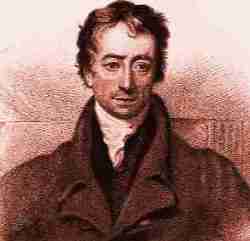
Charles Lamb was an English essayist and poet and friend of Samuel Taylor Coleridge. He was born on 12th February 1775 in London, England and died on 27th December 1834 in Edmonton, Middlesex, England aged 58.
Major Works
“Blank Verse” (1798)
“A Tale of Rosamund Gray” “Old Blind Margaret” (1798)
“John Woodvil” (1802)
“Tales from Shakespeare” (1807)
“The Adventures of Ulysses” (1808)
“Specimens of English Dramatic Poets who Lived About the Time of Shakespeare” (1808)
“Mrs. Leicester’s School” (1809)
“Essays by Elia” for London Magazine. (1820-25)
Biography Timeline
1775: Charles Lamb was born on 12th February in London, England. He was the son of a scrivener who was confidential clerk to Samuel Salt one of the bencher’s of the Inner Temple. He was educated at Christ’s Hospital in London, where he met and became a lifelong friend of Samuel Taylor Coleridge.
1789: He begins work as a clerk at the South Sea House in London.
1792: He transfers to India House. The death of Mr Salt leaves the family in reduced circumstances
1796: His sister Mary kills his mother in a fit of madness with a table knife. (Lamb looked after her for the rest of her life and she was to be his constant companion and the “Cousin Briget” of many of his essays). He contributes four sonnets to Samuel Taylor Coleridge’s “Poems on Various Subjects”.
1798: He publishes “Blank Verse” in collaboration with his friend Charles Lloyd (of Lloyd’s Bank fame). This includes “The Old Familiar Faces” which became one of his best loved poems.
1807: Charles and Mary move around from one set of lodgings to another and most of his literary outpourings bring neither fame nor much needed money. He is asked by William Godwin to help contribute to his “Juvenile Library”. To this he contributes the work by which he was to become famous, “Tales from Shakespeare”. (Charles worked on the Tragedies whilst Mary worked on the comedies).
1808: They again collaborate on a work for Children “The Adventures of Ulysses”.
1812: He publishes works on Hogarth and Shakespeare which appeare in the journal “The Reflector” edited by Leigh Hunt.
1818: His many works for various publications were brought together in the “Works of Charles Lamb” and because of this he is asked by the “London Magazine” to contribute a series of essays. These essays, under the pseudonym “Elia” (named after a fellow Clerk in India House) were to secure his fame once and for all.
1820-25: First series of “Essays of “Elia” for the “London Magazine”.
1823: He leaves London and takes up a cottage in Islington now he is earning more money. Charles and Mary take with them Emma Isola a young orphan whom they looked after until she married.
1825: He retires from India House on a pension of two thirds of his salary. The Lambs go to live at Enfield and then Edmonton.
1833: Emma Isola marries the publisher E. Moxon. “The Last Essays of Elia” are completed.
Charles Lamb died of a streptococcal infection from a wound he suffered after a fall in the street on 27th December 1834 at Edmonton, Middlesex, England. He was buried at All Saint’s Churchyard in Edmonton, London, England.
Influences
Lamb was educated at Christ’s Hospital boarding school and many of its students later wrote of the violence they suffered from the staff. He suffered from a stammer which made him a particular target. One of his fellow pupils was Samuel Taylor Coleridge who became a lifelong friend and was the only one there who relieved his solitude. Coleridge had a strong influence on his thinking as an artist and philosopher even though he left school at the age of fourteen. He was a Londoner through and through and loved the city and its life and William Wordsworth called him “a scorner of the fields”. He felt safe and secure within its boundaries and his essays are full of anecdotes about London life including beggars, chimney sweeps, the theatre and a variety of other details of place and character. Christianity was also an important part of his life even though he was not an avid churchgoer and favoured non conformism. He described the New Testament to Coleridge as his “best guide” for life
In adult life he not only conversed with Coleridge and Wordsworth but William Hazlitt and a great number of other writers. His own prose style was unique and highly personal and conveyed an active imagination which took flight in seemingly illogical directions using humour and pathos to get his points across. Always watching what was going on around him he had a particular gift for analysing characters. He also described himself without arrogance. For example, in “A Chapter on Ears” he goes on to describe how tone deaf he is.
Due to his work at South sea House his Essays were written under a pseudonym, “Elia”. This was taken from the surname of one of his colleagues, an Italian whom he admired. Whilst there he became famous as a party goer who liked a drink and good food and was an entertaining storyteller who could make people laugh. In love he was not so successful as his affection for the Hertfordshire girl Ann Simmons as a youth shows. He addressed several sonnets to her but the relationship petered out.
He has been called the “Prince of Essayists” and has contributed a great deal to the variety and expansion of the format. He achieved his fame between 1820 and 1825 with his essays for the “London Magazine” which captivated the reading public.
Due to his unique style since his death he has become more of a favourite among certain small groups of readers rather than being an author of mass appeal or scholarly investigation although his work was taught in British schools until the outbreak of the Second World War. Since the 1980s, however, his prose has undergone a renewed appeal amongst literary scholars. The Charles Lamb Bulletin is still produced to this day by the Charles Lamb Society. (See link here).
Further Information
For more information see Lamb’s Britain Unlimited page here.
List of works by Lamb.