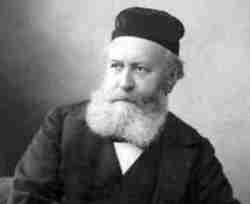
Charles Gounod was a French composer principally of opera and sacred music. He was born on 17th June 1818 in Paris, France and died on 18th October 1893 in Saint-Cloud, France aged 75.
Major Works
Requiem (1842)
“Sapho” (1851)
“Saint Cecilia Mass” (1855)
“Le Bourgeois Gentilhomme” (1856)
“Faust” (1859)
Biography Timeline
1818: Charles Francois Gounod was born on 17th June, at 11 Place St-Andre des Arts in Paris, France. He was the second son of Louis Francois Gounod a painter and engraver, and Victoire Lemachois.
1823: His father dies and his mother gives piano lessons in order to look after her two boys.
1829: He enters the Lycee Saint-Louis.
1831: In January he sees a performance of Giachino Rossini’s opera“Othello” and is very impressed by it.
1832: A visit to see Mozart’s opera “Don Giovanni” inspires him to become a composer.
1835: He leaves school.
1836: He receives lessons from several composers in composition including Fromental Halévy. He enters the Prix de Rome for the first time.
1839: He wins the Grand Prix de Rome at his third attempt.
1840: As his prize he goes to study in Rome on 27th January. Whilst there he meets Fanny Hensel, Felix Mendelssohn’s sister, who introduced him to German music.
1841: He composes and conducts at the first performance on the 1st May at the church of St. Louis of the French for the feast of King Louis-Philippe.
1842: He leaves for Vienna in September.
1843: He performs his Mass in in the St. Charles Church in Vienna and in April he visits Leipzig in Germany where he meets Felix Mendelssohn in person. In November, back in France he is appointed as choirmaster of Foreign Missions.
1847: The Archbishop of Paris authorises Gounod to wear clerical clothing and he lives in the house of the Carmelites and takes tuition in theology at the Saint-Sulpice Seminary.
1850: He leaves Saint-Sulpice.
1851: The first performance of his opera “Sapho” take place on 16th April to much critical applause.
1852: He marries Anna Zimmerman on 20th April. She is the daughter of a professor at the Conservatory. From the on he will stay in Saint-Cloud in the house of his in-laws where he will then build a cottage in the grounds. In May he is appointed Director General of the teaching of singing in the schools of Paris as well as director of the city’s Brass band, choral movement.
1855: The first performance of the “Saint Cecilia Mass” on 22nd November.
1856: He is awarded the Chevalier of the Legion de Honor in January.
1856: His son Jean is born on 8th June. In July he writes “Vive l’Empereur” in honour of Napoleon the Third and this becomes the official anthem of the Second Empire.
1857: He works on his opera “Faust” although the score is dismissed by the Paris Opera, however the Theatre Lyrique, agree to take it.
1858: His mother dies on 16th January.
1859: The first performance of “Faust” is given at the Theatre-Lyrique on 19th March. It is a great success and goes on to be performed 314 times.
1860: He composes “La Colombe” (The Dove) and “Philemon et Baucis” is performed in the Theatre-Lyrique in February.
1861: He works on a new opera“La Reine de Sabat” although it is a failure when it is performed in the following year.
1863: In March Gounod works on “Mireille” based on a poem by Frederic Mistral of Provence who invites him to come and work with him. Birth of his daughter Jeanne is born in September.
1864: “Mireille” is performed at the Theatre Lyrique on 19th March but is not well received by the audience.
1866: He is elected to the Academy of Fine Arts in May and in August he is promoted to Officer of the Legion d’Honor.
1867: The first performance of “Romeo et Juliette” is held at the Theatre-Lyrique on 27th April. It is a great success.
1870: Due to the revolutionary political situation Gounod leaves Paris and travels to Liverpool, England and then on to London with his family.
1871: In December he helps found a choral society at the Royal Albert Hall in London with Georgina Weldon and she sings many of his songs.
1874: He returns to France in June.
1876: During the summer he writes “Cinq-Mars” and a Mass of “Sacré-Coeur de Jésus”.
1877: “Cinq-Mars” is a failure at the Opera-Comique in Paris. In August Gounod is appointed Commander of the Legion d’Honor.
1880: He is appointed Great Officer of the Legion d’Honor.
1882: The oratorio “La Redemption”, written ten years earlier, is a great success at its first performance on 30th August at the Birmingham Music Festival in England.
1887: He conducts a Mass in the cathedral at Rheims on 24th July in memory of Joan of Arc.
1890: He writes a study of Mozart’s “Don Juan”
1891: Now in failing health he retires to his home in St. Cloud although he sometimes still gives concerts.
Charles Gounod dies on 17th October 1893, in Saint-Cloud. He is given a State Funeral in the church of the Madeleine, Paris on 27th October, with Camille Saint-Saens playing the organ and Gabriel Faure conducting the orchestra. He is buried in the cemetery of Auteuil.
Influences
Charles Gounod’s mother was a pianist who gave her son his early training in musical theory and performance. He later studied a degree in philosophy and then switched to music under the Bohemian composer Anton Reicha. After Reicha died he entered the Paris Conservatoire, where he studied under Fromental Halévy and Jean-François Lesueur. At this stage in his life, he was influenced by the works of Johann Sebastian Bach and Felix Mendelssohn. His later and famous “Ave Maria” was based on Bach’s C-major prelude from the “Well Tempered Clavier” a study in harmony in broken chords. After winning the Prix de Rome he spent several months studying the works of the Renaissance composer Giovanni da Palestrina whom he was introduced to by the Dominican preacher Père Lacordaire.
Returning to Paris via Germany he met Felix Mendelssohn in Leipzig. In Paris he became organist and choirmaster at the Church of the Missions Étrangères and in 1846 he entered the seminary of Saint-Sulpice but decided against taking holy orders.
Although nowadays he is largely known as an operatic composer his first operas, “Sapho” in 1851, at the instigation of the mezzo-soprano Pauline Viardot, and “La Nonne Sanglante” (The Bloody Nun) in 1854 were not received well by the public despite good reviews by Hector Berlioz. He tried comic opera with “Le Médecin Malgré Lui” (The Mock Doctor) based on Molière’s comedy in 1854 but his most famous work is “Faust” based on Johann Wolfgang von Goethe’s tragedy which he had started writing in 1852 and was finally premiered in 1859. From this point his career took off. “Faust” marked a new point in the development of French opera but sadly came to overshadow his later works. The publisher Antoine de Choudens bought the rights and promoted the work in several European countries and it is still amongst the most popular in the repertoire in the twenty-first century. Not everyone liked it however and Richard Wagner called it a “feeble French travesty of a German monument”.
He spent time in both Paris and London conducting choirs and producing music for them including two masses and several oratorios such as “La Rédemption” (dedicated to Queen Victoria) and “Mors et Vita” (Life and Death). Many critics then and since have suggested his choral music to be over sentimental. He wrote two symphonies. Symphony No. 1 in D major of 1855 was the inspiration for the Symphony in C by his pupil Georges Bizet.
He was highly celebrated during his lifetime and although some later French composers revered him, such as Maurice Ravel who said he was the “real founder of the mélodie in France his music fell out of fashion. His refusal not to support Wagner’s style had gained him many enemies amongst the critics. Claude Debussy stated, “Gounod, for all his weaknesses, was necessary as his art represents a moment in French sensibility/ Whether one wants to or not, that kind of thing is not forgotten”.
His religious music became unfashionable during the twentieth century although his songs were influential in France, leading the way for Gabriél Fauré and Debussy, few are well known nowadays.
The operas of Jules Massenet show his indebtedness to the extent that he was even called “la fille de Gounod” (The Son of Gounod). Camille Saint-Saëns was also an admirer. Fauré was also influenced by his French strand of classical restraint, taste and elegance.
Further Information
List of compositions by Gounod.