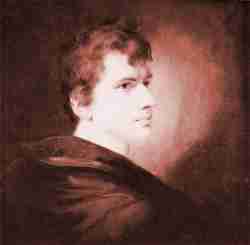
Carl Joachim Friedrich Ludwig von Arnim (better known as Achim von Arnim) was a German poet and novelist and leading figure in German Romanticism along with Clemens Brentano and Joseph von Eichendorff. He was born in Berlin, Germany on 26th January 1781 and died in Niederer Flaming, Germany on 21st January 1831 aged 50.
Major Works
“Des Knaben Wunderhorn” (1805-8)
Biography
1781: Carl Joachim Friedrich Ludwig von Arnim (better known as Achim von Arnim) was born on 26th January in Berlin, Germany. His family were minor nobility who could trace their family back to the thirteenth century. His father was the Prussian Chamberlain Joachim Erdmann von Arnim who was a royal envoy in Copenhagen, Denmark and Dresden, Germany. He also became the director of the Berlin Court Opera. His mother, Amalia Carlonia Labes died three weeks after she gave birth to him. Amalia’s mother looked after the young Carl and his older brother, Carl Otto, in Zernikow in Brandenburg and also in Berlin. Arnim was sent to be educated at the Joachimsthal Gymnasium in Berlin.
1798: He goes to the University of Halle in Germany to study law, mathematics and natural science. There he produced his first work “Theorie der Elektrischen Erscheinungen” (Theory of Electrical Phenomena). He was to meet the poet Ludwig Tieck at the house of his friend the composer Johann Friedrich Reichardt.
1800: He continues his studies at the University of Gottingen and meets Johann von Goethe and Clemens Brentano who awaken in him a love of literature.
1801: He qualifies as a Doctor of Medicine although he never practises it. After his studies he embarks on a major tour or Europe with his brother and is with Brentano on a journey down the Rhine. In Paris he meets Friedrich von Schlegel and then continues on to London and thence to Scotland.
1802: He publishes “Hollin’s Liebeleben” (Hollin’s Life of Love.).
1804: He eventually returns home and begins collecting a series of German folk tales and songs. He publishes “Ariel’s Offenbarung”.
1805: His collection of folk songs and tales, jointly edited by Clemens Brentano and after seeking the advice of Goethe in Weimar is published and is entitled “Des Knaben Wunderhorn” (The Boy’s Magic Horn).
1806: The Prussian army are defeated by Napoleon Bonaparte at the Battle of Jena-Auerstadt and Arnim follows the royal court to Konigsberg.
1807: He moves back to Weimar and then to Kassel where he meets Jacob Grimm and Wilhelm Grimm. He finally settles in Heidelberg where Brentano and he begin to edit the second and third collections of “Des Knaben Wunderhorn”.
1808: He publishes the newspaper Zeitung fur Einsiedler (Newspaper for Hermits). The second and third editions of “Des Knaben Wunderhorn” are published as well as “Trosts Einsamkeit” (Trost’s Solitude).
1809: He moves to Berlin but fails to get a job with the Prussian civil service.
1810: He marries Brentano’s sister Bettina on 11th March. The couple go to visit Goethe in Weimar after the wedding but Goethe’s partner and Bettina do not get along. Arnim founds the patriotic Deutsche Tischgesellschaft, an association of Christians.
1811: He publishes “Halle und Jerusalem”.
1812: He publishes “Isabella von Ägypten” (Isabella of Egypt).
1813: He commands a Landsturm Battalion during The German Campaign (Wars of Liberation). In October he publishes a newspaper in Berlin called The Prussian Correspondent. He publishes “Die Appelmänner” (The Apple Men).
1814: He quarrels with Barthold Georg Niebuhr, the previous proprietor of the newspaper and leaves it and Berlin to go to the family house, Kunstlerhaus Schloss, in Wiepersdorf where he was to remain for the rest of his life. His wife remained in Berlin for much of the time. His literary output was varied from that time on and included newspaper articles besides his novels and poems.
1817: The first volume of his novel “Die Kronenwachter” (the Crown Guards) is published.
1818: He publishes “Angelika, die Genueserin und Cosmus, der Seilspringer” (Angelika, the Genoese Woman and Cosmus the Rope Dancer).
1819: He publishes “Die Gleichen” (The Same).
1820: He visits Jacob and Wilhelm Grimm and Johann von Goethe for the last time.
Achim von Arnim dies on 21st January 1831 of a stroke in Wiepersdorf, Germany. He was buried at the Kunstlerhaus Schloss in Wiepersdorf, Germany.
Influences
Arnim was influenced by the earlier writings of Johann Wolfgang von Goethe and Johann Gottfried Herder where he learnt about traditional old German legends. He also met Jacob Grimm and Wilhelm Grimm in 1807 and would have known about the fairy tales.
Living in Berlin in 1810 he met and was influenced by the writer Clemens Brentano. He fell in love with his sister Bettina and the following year they married and both became avid writers. His writings focus on the natural world and common everyday people.
Shortly after the wedding they met Goethe at his home but his wife Christiane took an instant dislike to Bettina and the relationship was sadly soured.
Many later artists were influenced by “Des Knaben Wunderhorn” both in literature and in music. The most high profile of these is probably Gustav Mahler’s song cycle “Des Knaben Wunderhorn“ (The Boy’s Magic Horn), published in 1905.
Further Information
List of works by Arnim.