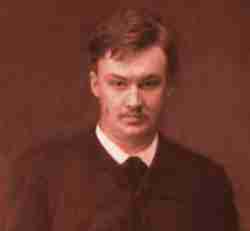
Alexander Glazunov was a Russian late Romantic composer, conductor and professor of music. He was born on 10th August 1865 in St Petersburg, Russia and died on 21st March 1936 in Neuilly-sur-Seine, France aged 70.
Major Works
Second Symphony (1866)
“Raymonda” (1898)
Violin Concerto in A Minor (1904)
Eighth Symphony (1906)
Piano Concerto No 1 (1911)
Concerto for Alto Saxophone, Flute, and Strings (1934)
Biography Timeline
1865: Alexander Konstantinovich Glazunov was born on 10th August in St Petersburg, Russia. His father Konstantin Glazunov was a wealthy publisher. His mother was a pupil of Mily Balakirev who taught her the piano.
1874: He begins studying piano aged nine.
1876: He writes his first compositions.
1879: Mily Balakirev (leader of “The Five” Russian nationalist composers) recognises his talent and recommends him to Nikolai Rimsky-Korsakov who takes him on as a private pupil.
1882: His father becomes a member of the nobility. His First Symphony “Slavonian” is premiered in a concert conducted by Balakirev.
1884: The wealthy timber merchant Mitrofan Belyayev recognises his talent and takes him on a trip to Western Europe where he meets Franz Liszt in Weimar. Belyayev rents out a hall and hires an orchestra to play the First Symphony which is a success and leads to further Russian concerts. He composes his String Quartet No. 2.
1885: Belyayev starts a publishing house in Leipzig, Germany to publish works of Russian composers at his own expense. He also asks Glazunov, Lyadov and Rimsky-Korsakov to advise him on up and coming new young Russian composers to support.
1886: He completes his Symphony No. 2 “To the Memory of Liszt”. The Russian Symphony Concerts are begun in St Petersburg.
1888: He makes his conducting debut. He completes String Quartet No. 3 “Quatuor Slave”.
1889: He conducts the Second Symphony at the World Exhibition in Paris.
1890: He composes Symphony No 3. He sets about helping Rimsky-Korsakov, complete some of Alexander Borodin’s works after his death including Prince Igor, Polovetsian Dances and the Third Symphony.
1892: He composes “Triumph March” for large orchestra and chorus.
1893: He composes Symphony No 4 and “Three Pieces for Piano”.
1894: He composes String Quartet No 4.
1895: He composes Symphony No 5.
1896: He is appointed conductor for the Russian Symphony Concerts. He composes Symphony No 6.
1897: He conducts the premiere of Sergei Rachmaninoff’s First Symphony on 28th March which is panned by the critics.
1898: He composes the ballet in three acts “Raymonda” and String Quartet No 5.
1899: He is appointed as a professor of Instrumentation at the Saint Petersburg Conservatory. He composes “Cantata after Pushkin for solo voices, chorus and orchestra”.
1900: He composes the one act ballet “The Seasons”.
1903: He completes Symphony No 7. “Pastorale”
1904: He completes the Violin Concerto which is first performed at a Russian Musical Society concert in St Petersburg on 15th February.
1905: He is promoted to Director of the St. Petersburg Conservatory and sets about reforming it.
1906: He completes Symphony No 8.
1907: He conducts the last of the Russian Historical Concerts in Paris on 17th May. He receives honorary Doctor of Music degrees from both the universities of Oxford and Cambridge in England.
1908: He composes “The Song of Destiny” dramatic overture in D minor for orchestra.
1911: He completes his Piano Concerto No 1.
1917: After the October Russian Revolution he remains in his post at the Conservatory keeping on good terms with the Bolsheviks and the Minister of Education, Anatoly Lunacharsky but begins to feel increasingly isolated. He composes his Piano Concerto No 2.
1921: He completes String Quartet No 6.
1927: He conducts concerts and gives lectures for the centenary of Ludwig van Beethoven’s death.
1928: He leaves Russia on the pretext of going to Vienna for the Schubert Centenary but never goes back. In reality he is tired of working under the conditions at the Conservatory. He conducts an evening of his works in Paris and then travels to Portugal, Spain, England, Poland and the Netherlands.
1929: His tour to the United States of America is unsuccessful. He marries Olga Nikolayevna Gavrilova whose daughter had been the soloist in the first Paris performance of his Piano Concerto No 2.
1930: The couple set up home in Paris. He finally resigns officially from the Conservatory where Maximilien Steinberg had been standing in for him while he was away. He composes String Quartet No 7 and “Hommage au Passé”.
1931: He composes the “Concerto-Ballata for Cello and Orchestra”.
1934: He composes the Concerto for Alto Saxophone, Flute, and Strings which is premiered in Nykoping, Sweden on 25th November.
1935: He completes the “Fantasy in G minor for Organ”.
Alexander Konstantinovich Glazunov died on 21st March 1936 in Neuilly-sur-Seine near Paris, France and was buried there. In 1972 his remains were taken to the Alexander Nevsky Monastery in Leningrad (now St Petersburg again).
Influences
Alexander Glazunov was a child prodigy and was taken on as a student by Nikolai Rimsky-Korsakov when he was still a high school student. “His musical development progressed not by the day, but literally by the hour,” Rimsky-Korsakov wrote. His mother was a piano pupil of Mily Balakirev who suggested she took her talented son to study with Rimsky-Korsakov after initial training with himself. There he excelled in counterpoint, harmony and large-scale orchestration. Both Balakirev and Rimsky-Korsakov promoted his first successful symphony, Op.5, in 1881, which he composed at the age of 16.
He was an active participant of the Belyayev circle of friends and composers and his work fitted into the conservative classic-romantic style. (Mitrofan Belyayev was a wealthy timber merchant and patron of the arts who mentored Glazunov and funded his European tours). By the time of his Second Symphony in 1866 he was seen as the heir to the Russian Nationalist Group and worked strictly to their principles and was internationally famous by the age of 21.
He was also influenced by Franz Liszt whom he met in Weimar in 1884 and began to idolise him. He particularly liked the symphonic poems. He also took on the grandeur of Alexander Borodin and admired the emotional lyricism and tragic depth of Pyotr Ilyich Tchaikovsky. His later symphonic works increasingly used Wagnerian orchestration and harmonic development. After 1887 he was also indebted to Sergei Taneyev who encouraged his use of the polyphonic development of his thematic material.
In 1905 he became director of the St. Petersburg Conservatory, where he had taught since 1899 and wrote few large-scale works after 1906. He remained in post after the Russian Revolution until 1928 and thereafter went to the United States and France. As a teacher he successfully bridged late-Romantic Russian nationalism with traditional European classical composition and influenced the next generation of Russian composers. His best-known student was Dmitri Shostakovich whom he helped not only academically but financially as well. Other students were the violinist Nathan Milstein and Sergei Prokofiev who would later go on to become a modernist after Glazunov’s earlier foundational teaching. His work on Russian ideals would later influence Igor Stravinsky as well as Vladimir Horowitz and he became a great champion of Russian music when he moved abroad.
Further Information
List of compositions by Glazunov.